It is on the morning of a day, end of May in 2023, when my daughter and myself leave Istanbul for a very special trip to Sanliurfa.
Sanliurfa or simply called Urfa is a city with a history of 12.000 years in the Southeast of Turkey , about 1300 km from Istanbul and lies in the Mesopotamia region very close to the Tigris and Euphrates Rivers as well as very close to the Syrian borderline lying in a fertile plain which is ringed by limestone hills on three sides .
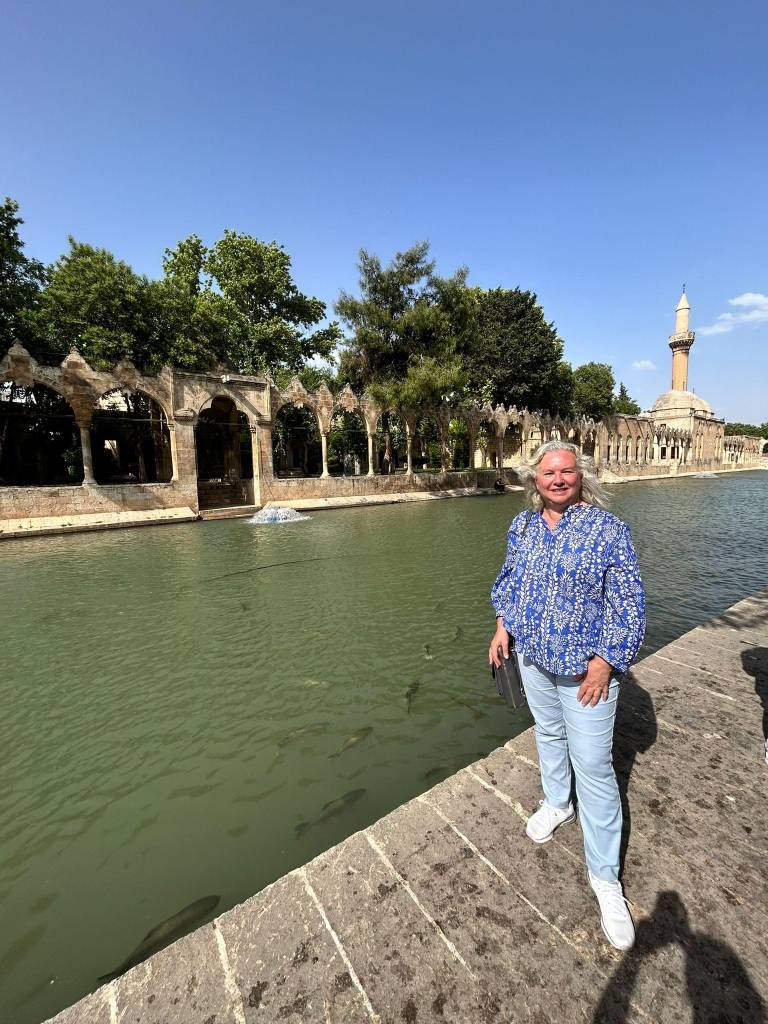
The city of Urfa , of great age, controls a strategic pass to the south which runs a road used since antiquity to travel between Anatolia and northern Mesopotamia and being also part of the ancient Silk Road. The modern name derives from the early Aramaic name Urhai, which was changed to Edessa when the town was refounded as a military settlement in the 3rd century BCE.
Sanlıurfa is a place considered sacred by Jews, Christians and Muslims. According to the Old Testament, Prophet Abraham, the “father of three monotheistic religions”, was born in the city of Urfa .
It is believed that Abraham was born in a cave near the location of the Mevlid-i Halil Mosque. For this reason, the region and the cave are considered sacred. It is interesting that so many Neolithic sites such as Göbeklitepe, Karahantepe, Nevali Çori etc are located in the same area, in very close proximity.
May is the best time to go to Urfa as the temperatures are about 25-27 degrees while later in summer it is becoming really hot .
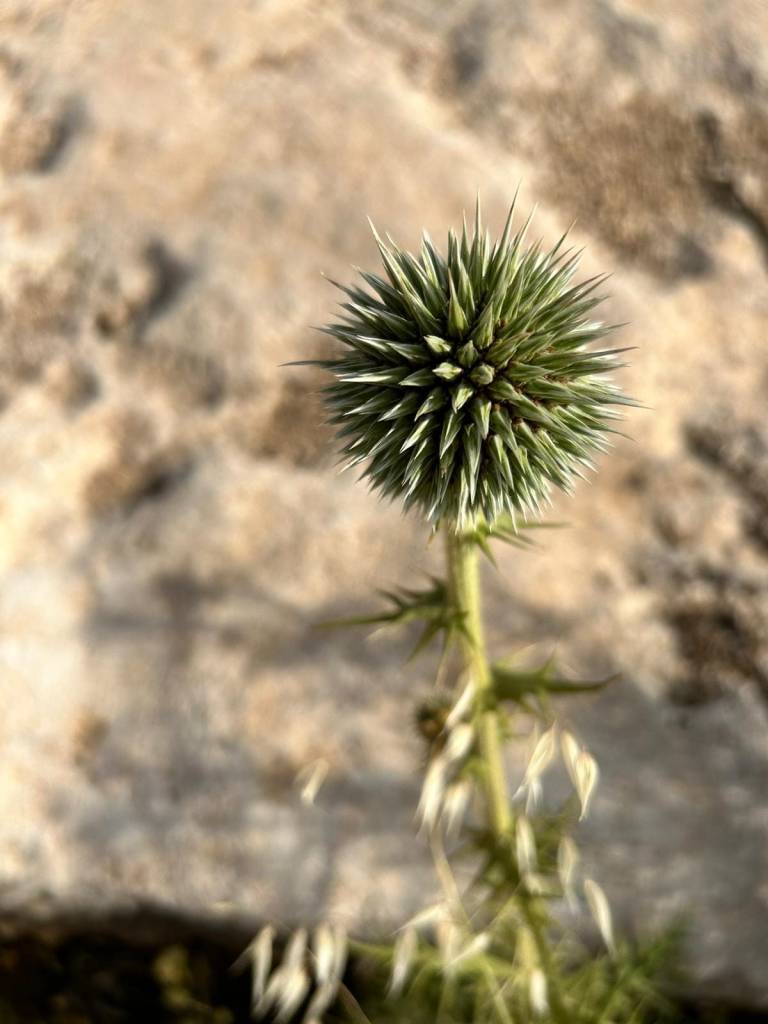
I love Anatolia since it is a very historical and important place not only for Turkey but for all mankind .
Uncountable civilizations that passed different parts of the country and which are thousands of years old are the base of todays “modern world ” . It is for some reason that Anatolia and especially the southeast part of Anatolia with its old cities like Urfa , Malatya , Gaziantep , Diyarbakir , Mardin, Adiyaman are called the “cradle of mankind ” .
It is not the first time that we travel to Urfa. I personally travelled to Urfa for the first time in 2013 to visit the archeological site of Gobeklitepe The oldest known temple on Earth , Gobeklitepe in Urfa, Turkey September 2013 and was so lucky to meet Prof Dr Klaus Schmidt , who was the Head of the excavations for Gobeklitepe in those years . It was a day that I will never forget since we were blown away of what we saw at Gobeklitepe and what was excavated so far by the archeological teams.
In 2013 Gobeklitepe was in the mid of nowhere while today the site is part of the Gobeklitepe Museum . It was not only the historical site and the discoveries but also the whole atmosphere of the hill , the natural surrounding and the energy of the whole place which was so impressive and so unique for us .
Since then I have been several times in Gobeklitepe and whenever I am standing on this hill at this gorgeous place I get goose bumps as I always remember the time we met each other for the first time.
Since 2018 Gobeklitepe is a UNESCO World Heritage site .
Our flight to Urfa takes nearly two hours .Once we arrive at the airport we first settle in our hotel in the city and then take our rented car. The distance between Urfa City and Karahantepe is about 60 km and an hour drive with the car .
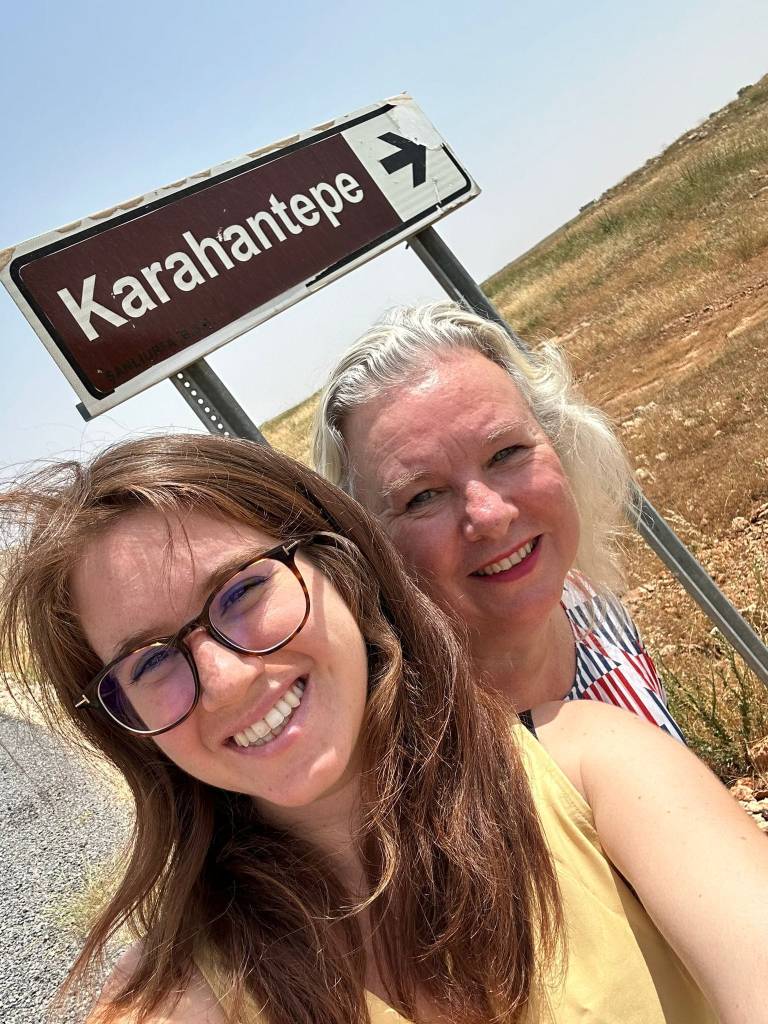
We are super excited as in the past decade there have been many archelogical discoveries made in the Urfa region . Besides Gobeklitepe nowadays it is well known that Gobeklitepe is not the only site at this location that dates back to the Neolithic period.
Today we count at least twelve , proably more , other archeological sites that belong to the same time period which are the protected sites of Karahantepe, Harbetsuvantepe, Gürcütepe, Kurttepe, Taşlıtepe, Sefertepe, Ayanlar, Yogunburç, Sayburç, Çakmaktepe , Nevali Cori and Gobeklitepe and the sites are altogether called “Tastepeler ” which means “Stone Hills” . All these archeological sites spread over an area about 200 square kilometers around Sanliurfa and archeological excavations are carried out under the supervision of the University of Istanbul by Prof Dr Necmi Karul and his teams in the past years in all 12 sites, providing important information about the daily lives and beliefs of people in the prehistoric period.
The weather is great and it is our first visit to the archeological site of Karahantepe .

First we drive on the main road.
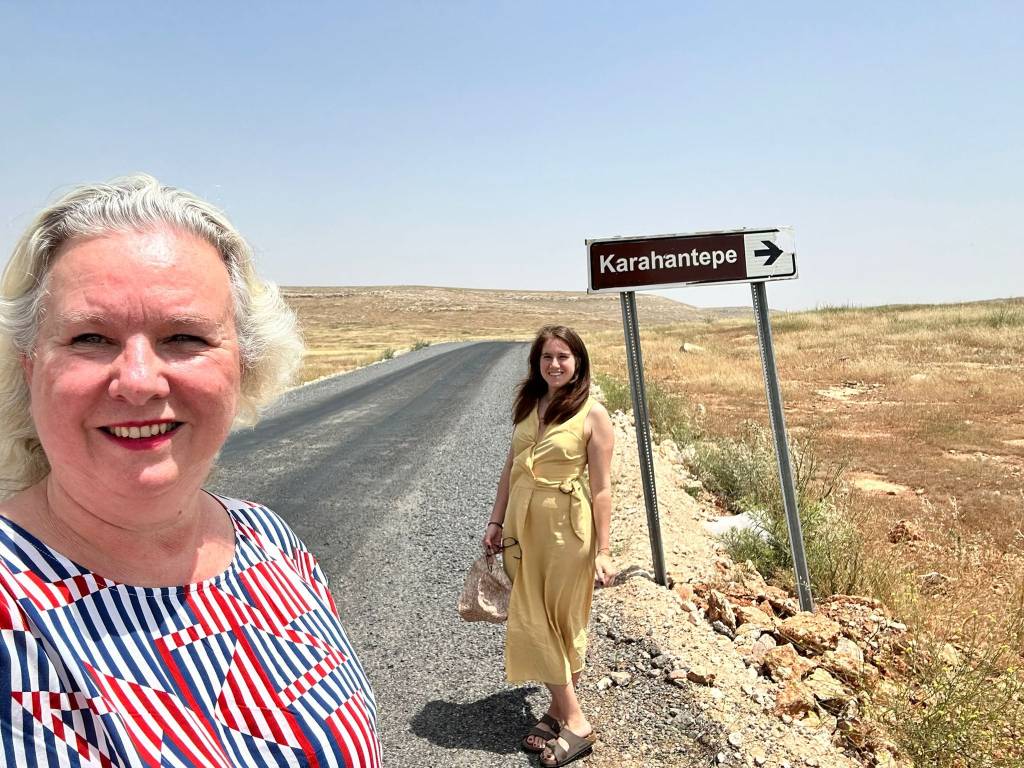
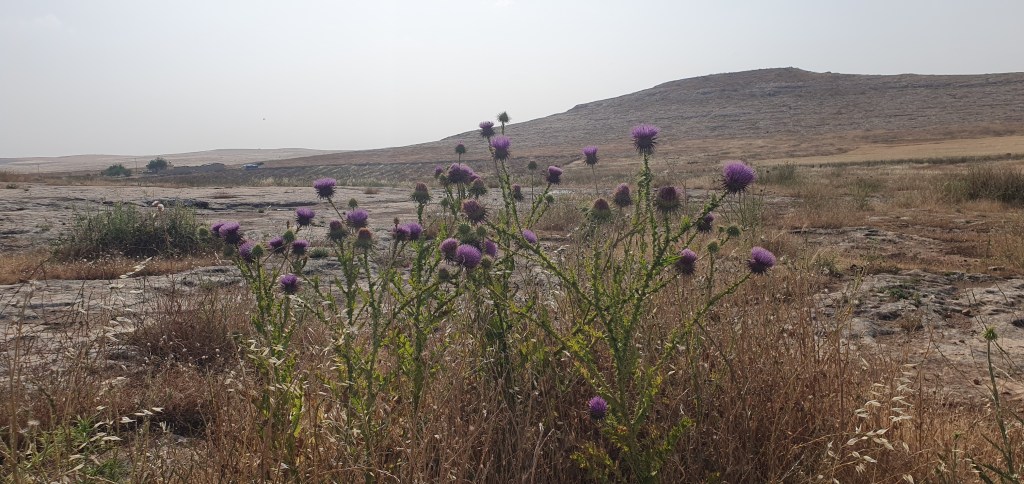
There are nearly no cars around and after a while we need to deviate from the mainroad to a country lane eastwards. On this village road there are also nearly no people .There are no settlements, no villages,no cars – nothing, similar to Gobeklitepe . We are here in the National Park of the Tek Tek Mountains and surrounded by pure nature.
There is just the small road in mid of nature and we just see birds and butterflies flying in front of our car. It looks as if they show us the way .My daughter and myself we love the nature , culture , history and archeology , science and for this reason we truly enjoy this wonderful day of discovery and togetherness . The slopes of the Tek Tek Mountains that we pass look so beautiful.

There are also very few road signs and it is not that clear which way we need to take at this countryside.
The navigation does not work properly. Actually my heart and my natural sense of orientation is my navigator so that we just move forward.
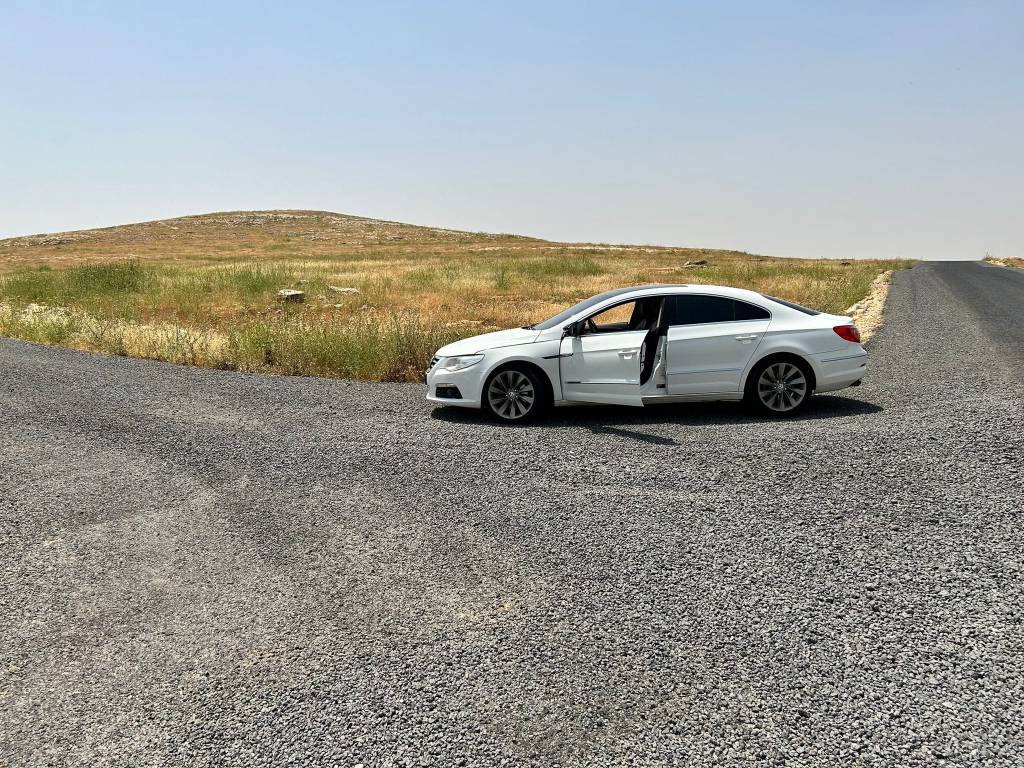
While we are close to Karahantepe a jeep with some local farmers is stopping in front of us.
The driver comes along and asks us where we are heading to . He is assuming that we want to go to Karahantepe and tells us how we need to find the way as we missed to turn one road. About an hour drive from Urfa we finally arrive at the archeological site of Karahantepe . It is so super fascinating to be here .
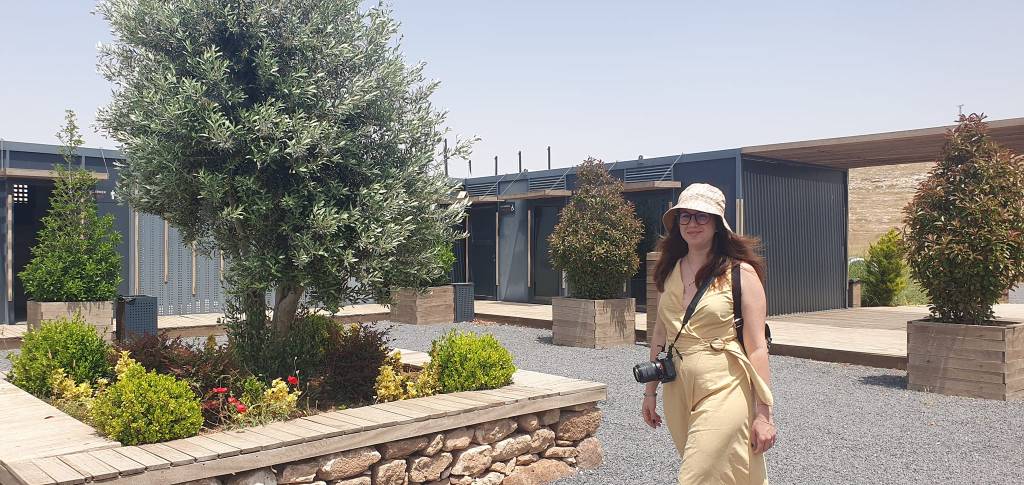
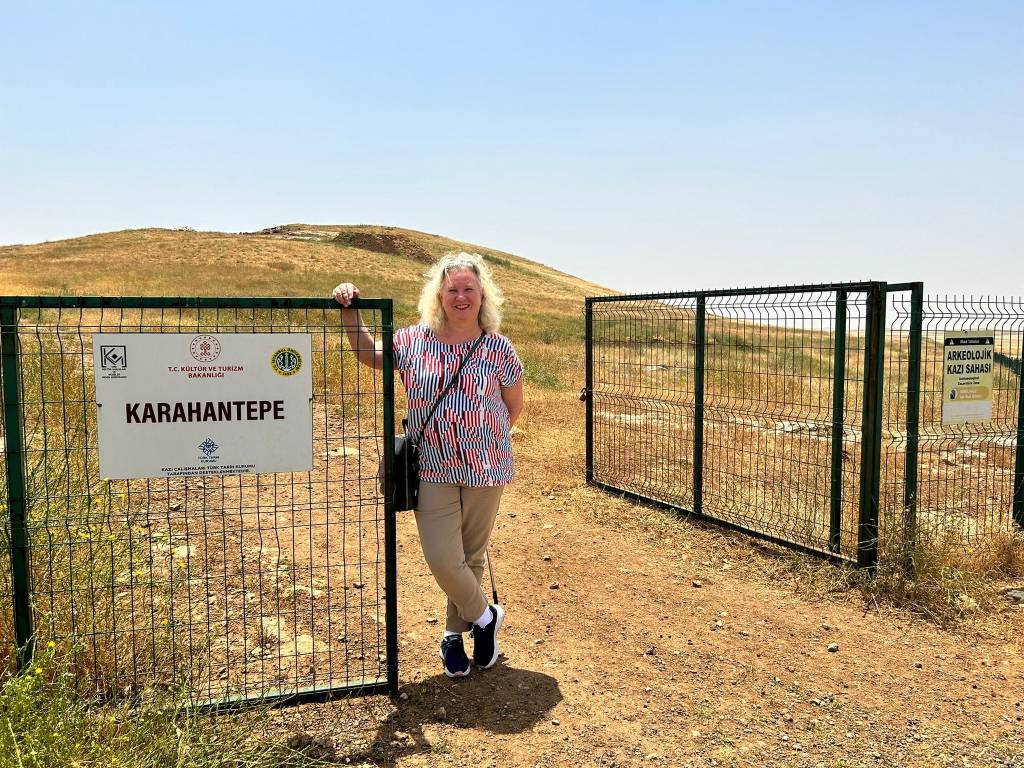
We park our car and arrive at the entrance gate of the site. The officers and guards of the site are welcoming us .
There is a group of international guests visiting the site today and they just try to rest in the shadow.

While we wait for our officer to visit the site we just sit in the shadow of the local Karahantepe Cafe and breathe the air .It is such a nice feeling to be here .
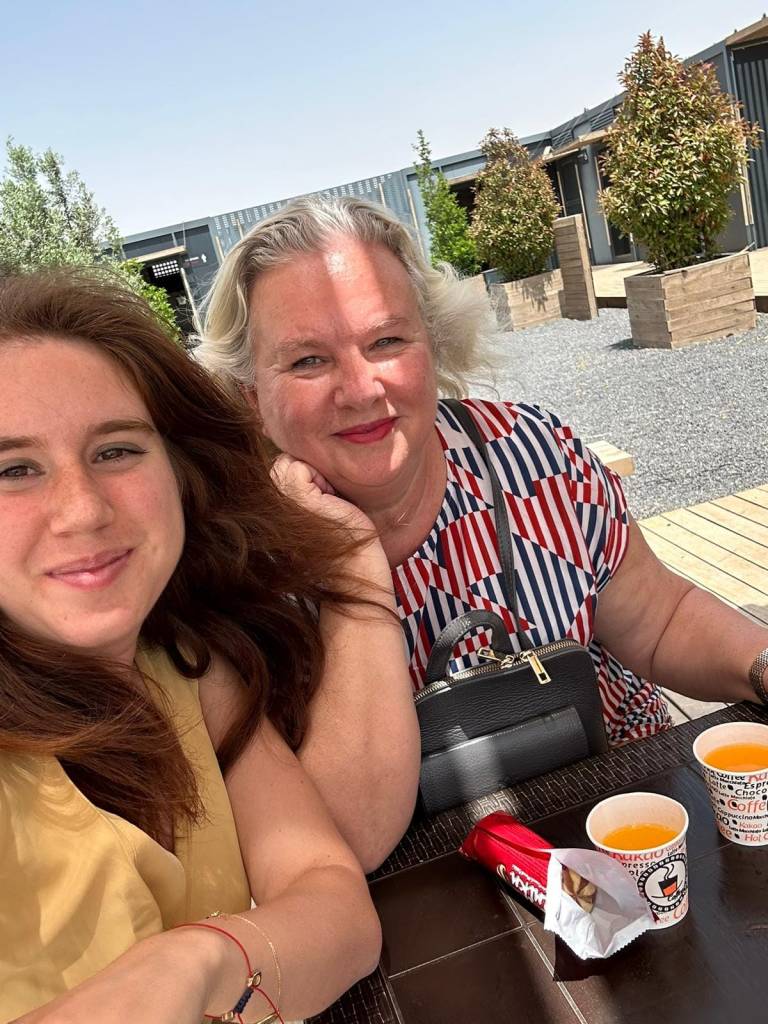
The officers offer some cold drinks before we will climb up the hill to discover the site as well .
Within the scope of the “Göbeklitepe Culture and Karahantepe Excavations” project, the excavations at Karahantepe and in the surroundings started very recently in 2019 managed by Professor Dr. Necmi Karul and the findings of the teams are gorgeous even in these few years.
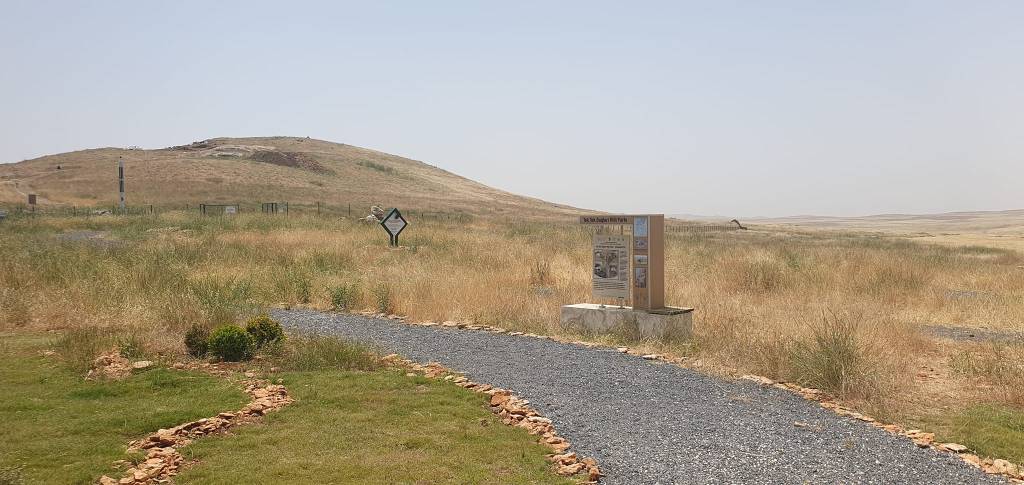
Actually the archeological teams can just work on the sites in the summer season , usually from June to September and then return to their work at their universities.

Each season we follow the news excitedly as every year new , superinteresting findings are made by the excavation teams and enlight not only the local history but history worldwide .

Mr Ismail is the officer who is taking care at the site personally for the visitors and guests. He is a very young guy but very experienced in cooperating with the archeological team and the professor and most importantly he knows the area very well as he was born in a little settlement very close to Karahantepe . Moreover he is very engaged to the site and its security as it is somehow the homeland of his family and himself .

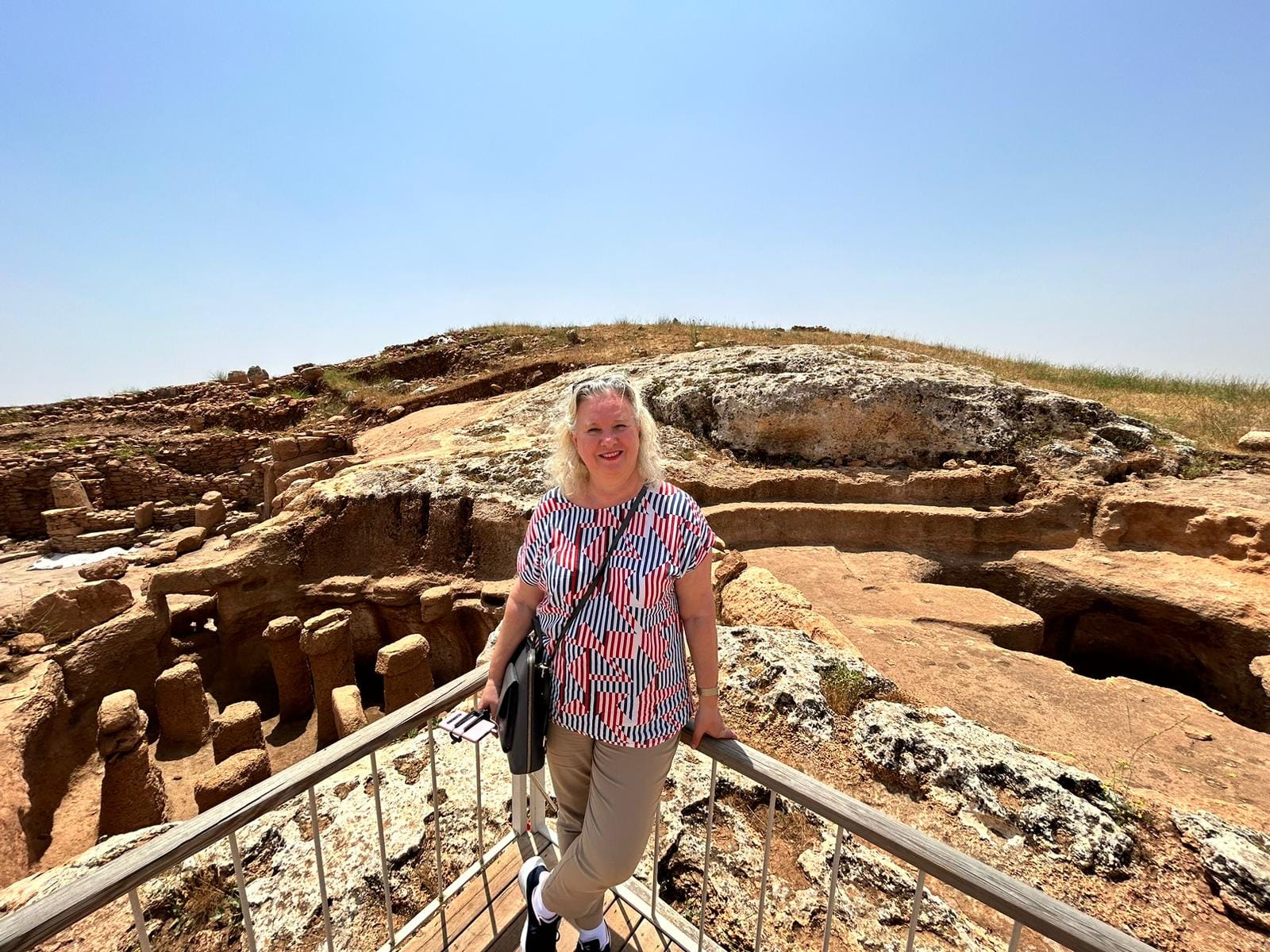
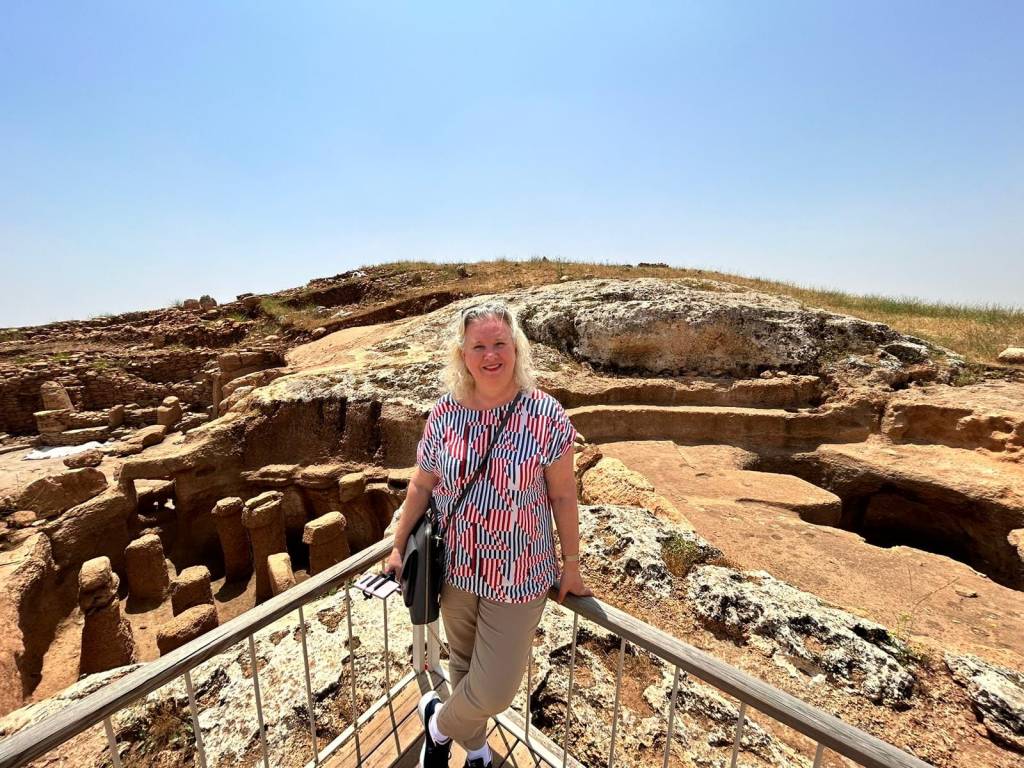
Together with Mr Ismail we climb up the hill and the first what we see is the unique location of the pool- like site where a man’s head with a snake body is carved at the rock wall .
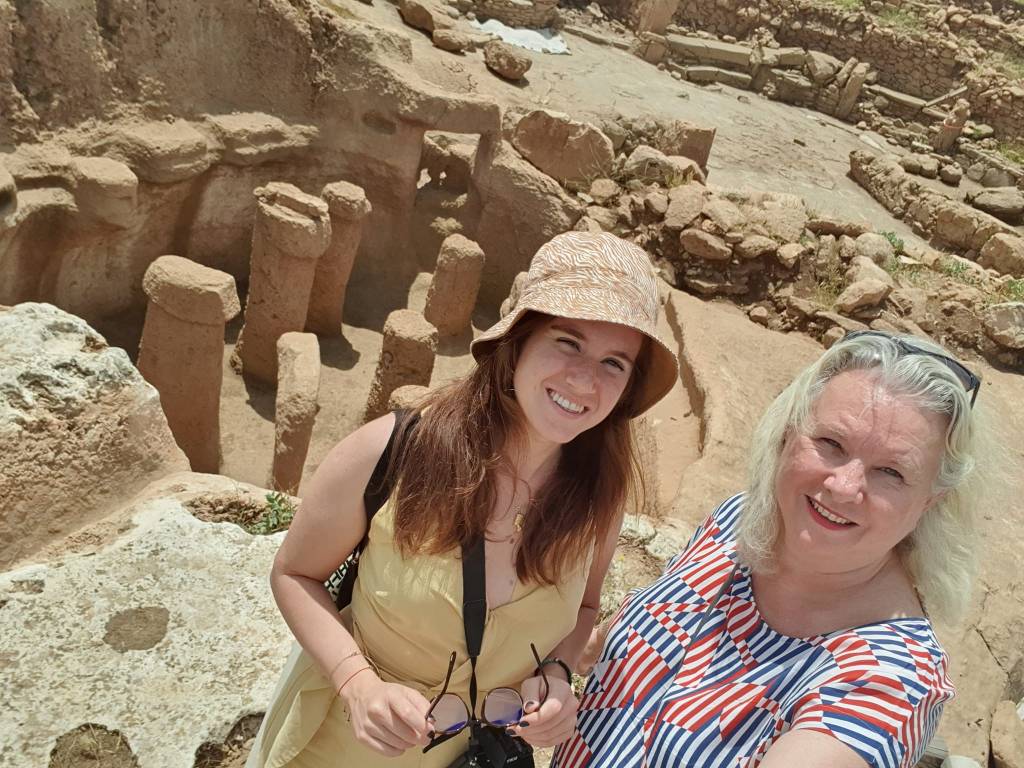
The expression on his face is very strong – it looks as if he is very serious or even angry .

Within the pool there are “fallus-like ” objects carved into the rock as well with two openings like entrances at its side.
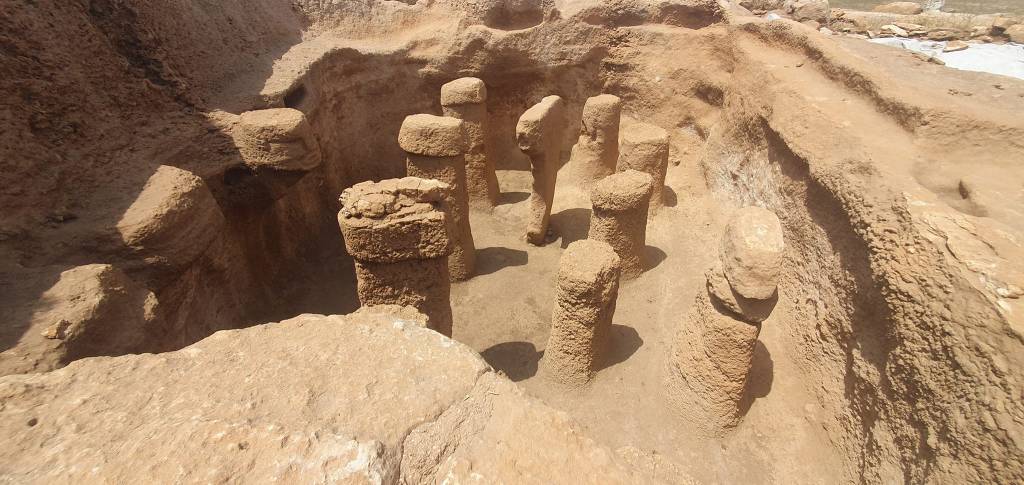
It is assumed that this location is a kind of pool that was filled with a liquid , either with water or with blood ,in the Neolithic period and could be probably used as a location where a ritual for men was made .
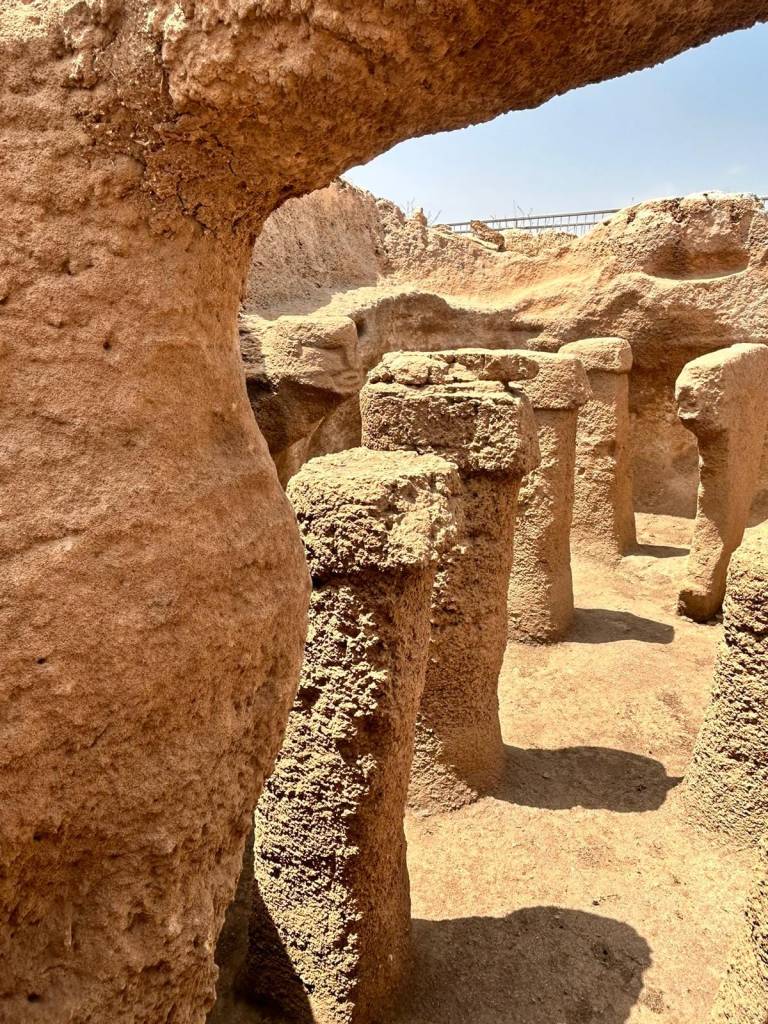
The entrances might be a kind of entrance door into the pool from one side and an exit door out of the pool on the other site. It is really a strange feeling to stand at the bar on top of this location that was built about 12.000 years ago , a time that we usually call stone age and assume that people were hunters and gatherers and that these folks had no fix settlements and were living a very primitive life while this special location looks a bit different. It seems that those folks of the stone age were mentally and practically much more developed and talented in their skills and their social life then known so far .
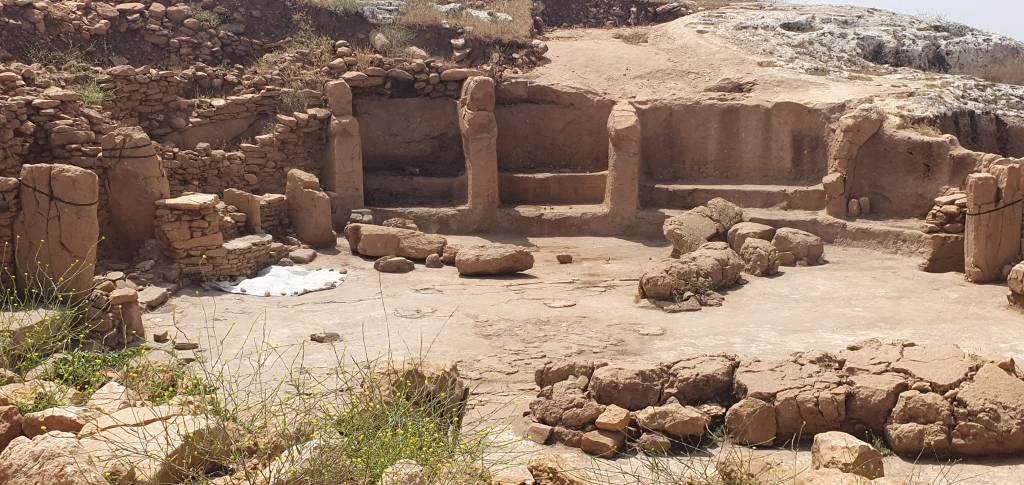
Next to this fallus pool-like location there is another location that looks like a place where people were gathering . In mid of this place are two T-shaped pillars lying on the ground . At the walls of this place you can see a lot of carvings of animals such as pigs , pigeons, birds, leopards and snakes similar to the animals of Gobeklitepe.


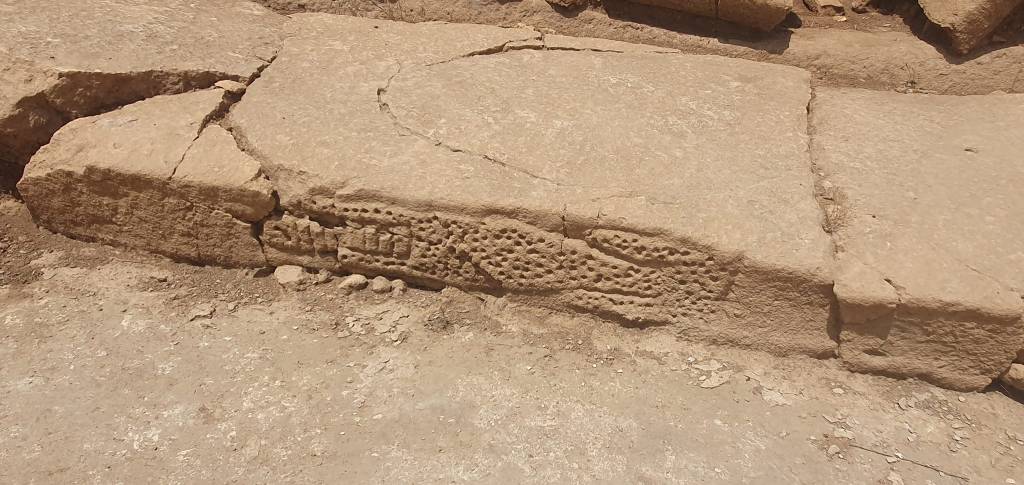
Within this place you can also observe sections where partly people maybe were sitting while they were grouping over here . It is unbelievable what we can observe at this gorgeous historical place .Everything looks so vivid as if the stone age people just left the site yesterday . Mr Ismail is showing us around .
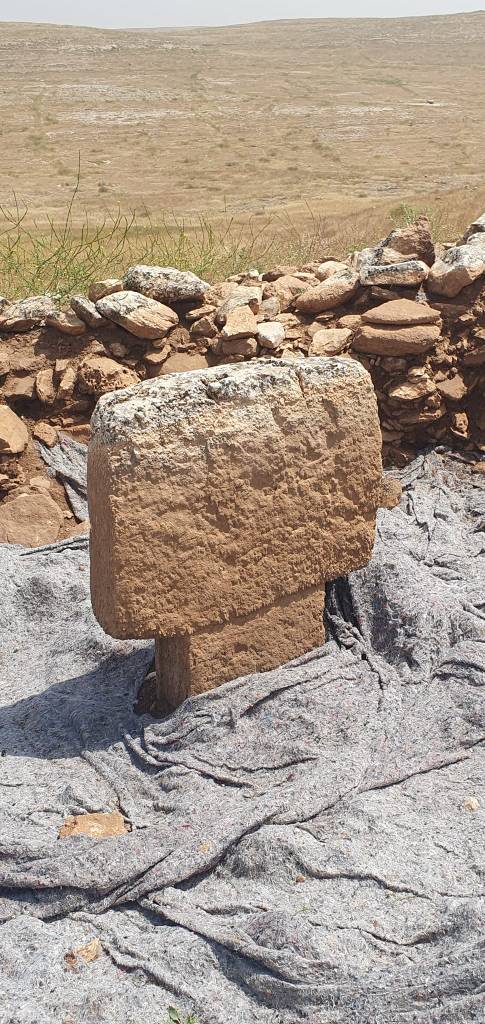
At another section next to the gathering place in a separate section we can see a T-shaped pillar with human arms and fingers carved on its surface . The assumptions is that the T-shaped pillars in the whole region are symbolizing human beings .

Similar to Gobeklitepe the whole hill of karahantepe is full of T-shaped pillars . Few are excavated but while we climb up on top of the highest point of the hill we can see the slopes of the hills around and the T’s of the T-shaped pillars looking out of the surrounding soil .It is so beautiful and so special !
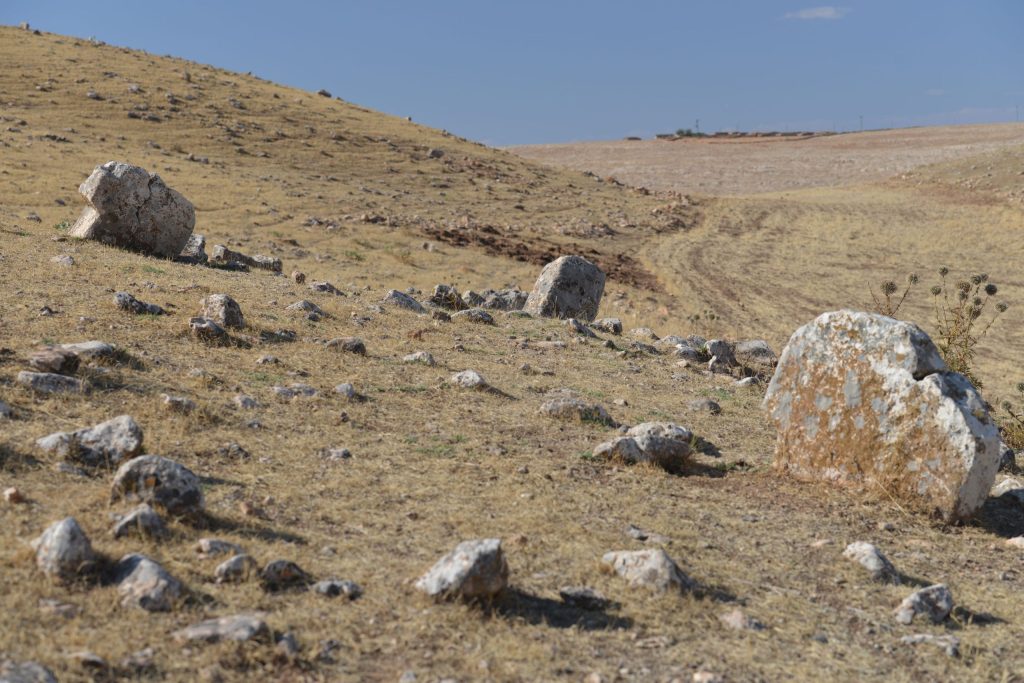
I think I cant describe my feelings when seeing this view. It is as if history is sleeping under the earth and we are so close to each other .Stunning !

Recent archaeological studies show that all the sites of Tastepeler that Karahantepe also belongs to are some of the oldest known Neolithic sites in the world. Nearly 250 “T” shaped obelisks have been unearthed at the Tastepeler sites so far.
The site of Karahantepe as well as the other sites of Tastepeler show us a totally new dimension of history , a totally new page is opened.
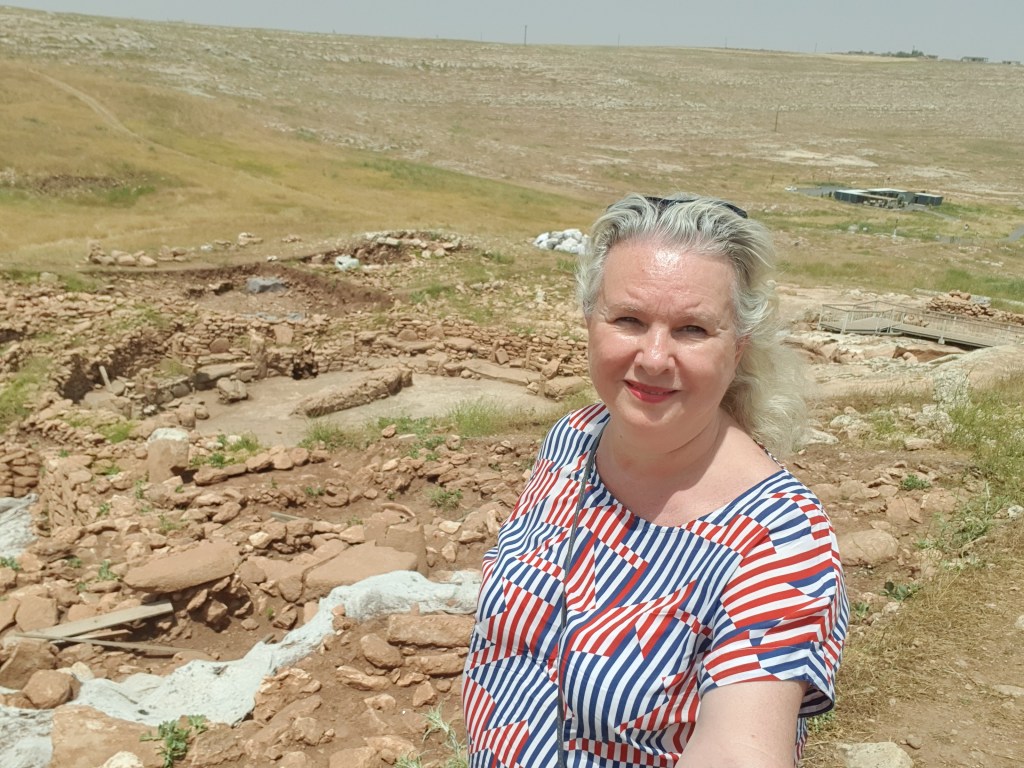
It shows that in Neolithic times the stone age folks were not just hunters and gatherers but they were living in a huge community and were having some social gatherings and rituals. They were able to imagine and build artifacts like the huge T-shaped pillars and put artistic elements like the animals on those . Animals that were symbols probably of their natural environment in this region and part of their life . It is a totally different approach of this age than it was stated before .
In this summer period some new gorgeous discoveries were made at Tastepeler again .

At Karahantepe a sculpture of a 2.3 metre tall sitting man holding his penis in his hands with ribs carved onto his body was found . An unbelievable another finding that makes the Karahantepe site again very important and unique . It is assumed that this sitting person might symbolize life and death .
The ribs on his body look like the ribs of a skelletton and could be the symbol of death while the penis in the hands of the man could be a symbol of life .
The mimic on the face of the sculture is also fascinating . As far as I know the sculptures of human beings in Urfa are one of the eldest in the entire world . So this sitting man probably is also one of its kind in world history which will might tell us new stories of the people who lived here 12.000 years ago .
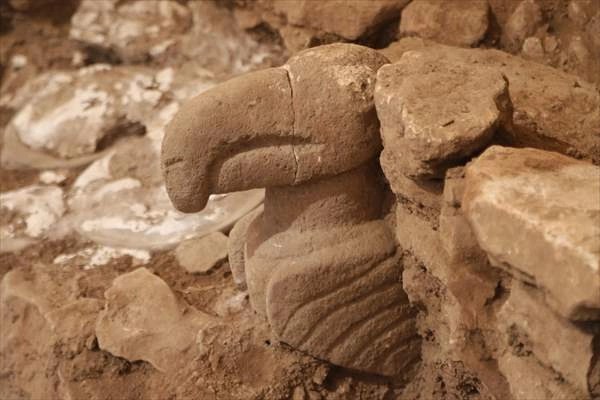
Another new finding was a beautiful vulture in Karahantepe and a pig in Gobeklitepe .

The specialty of the pig is that there is some ancient natural color left on the pig sculpture which is also extraordinary for a piece of this time period .
When comparing the ancient sites of Gobeklitepe and Karahantepe we can observe that the ancient site of Gobeklitepe is full of animal symbols .Single animals as well as groups of animals are placed onto the limestones as reliefs .This probably shows that in the Gobeklitepe period the human being felt more like a part of the natural ecosystem and his surrounding and he lived in a certain harmony with the flora and fauna of his environment .
In Karahantepe it is a bit different since significantly the animals are bit more in the background while the human being is coming more into the focus .The human head with the snake body, the sculpture of the sitting man are showing us a a different timeperiod and philosophy in Karahantepe where the human being is maybe starting to dominate his environment eg by making use of the animals in terms of farming and seeing himself separate and more on top of the flora and fauna around. There is definitely a new emphasis on the human being in Karahantepe .
After walking under the sun on top of the Karahantepe slopes for a few hours and watching all the details of the site we fall tired with all the gorgeous impressions around us.
From the top of the Karahantepe hill you also have a phantastic view to all the Tek Tek Mountains around and the very best is that you see nothing but a pure and virgin nature .
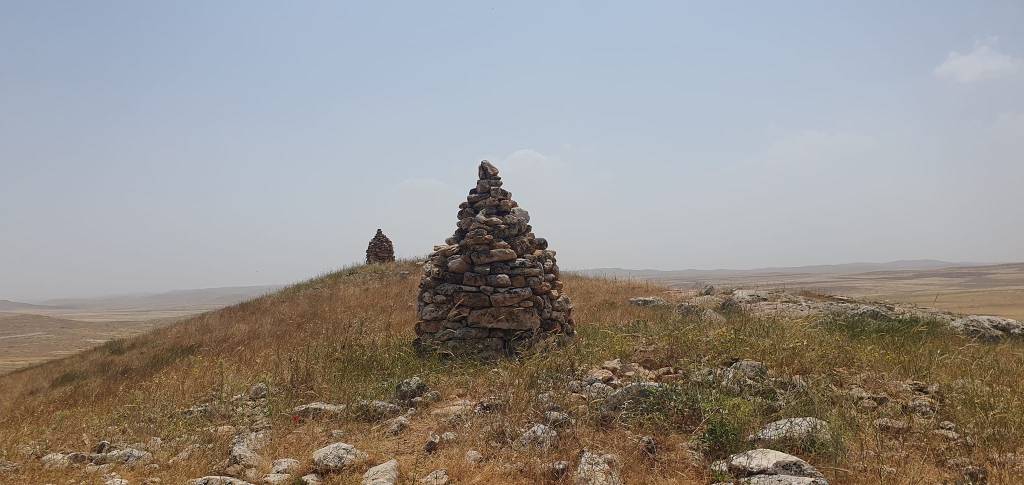
We breathe , we look into the sun .
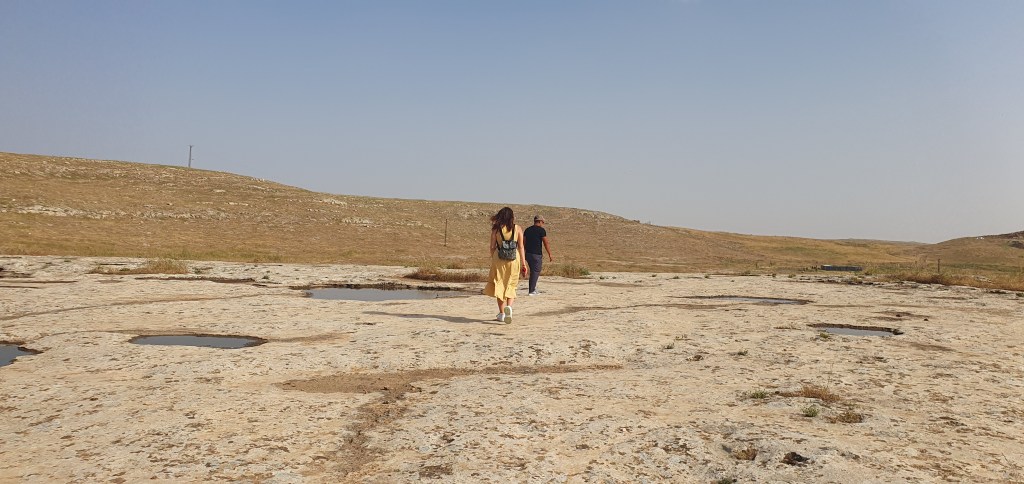
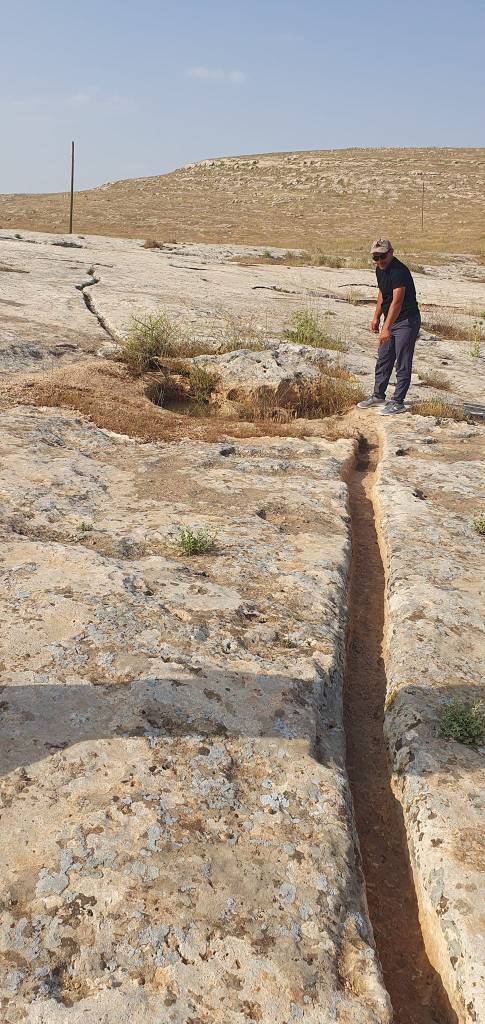
Mr Ismail also shows us the natural waterways and waterbassins in the ground that were used by the Neolithic folks .

We embrace the wonderful location and have many talks to Mr Ismail who knows the environment and the near history of the location so well.
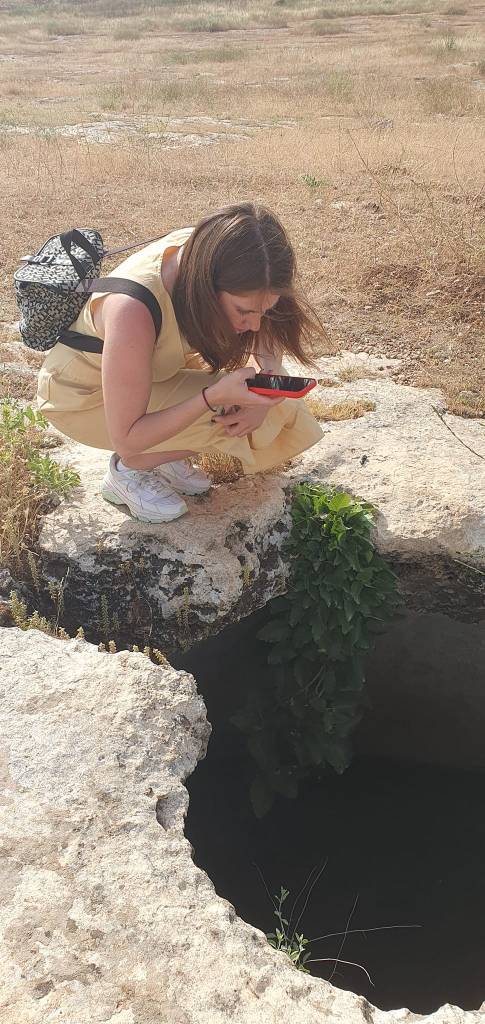
We cant get enough to stay here .
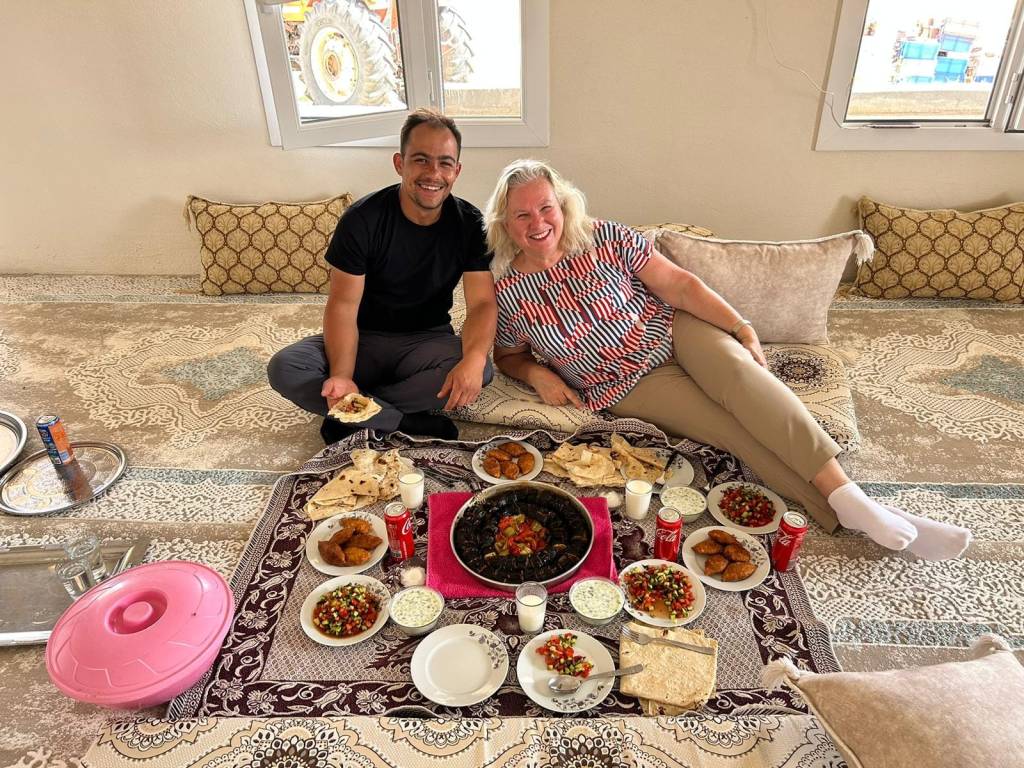
In the afternoon Mr Ismail is so super gentle to invite us to his home which is just a few meters around the corner . He is just married and his young wife prepared some great lunch for us and we are welcomed as really special guests .
What a perfect day it is – I cant say even more .
Even today I feel so grateful to have had the unique opportunity to live this day , especially together with Ismail and my daughter and to share our insights , our feelings , our ideas refering Karahantepe.
Sitting on the ground together with Mr Ismail ,as it is tradition in this region , at his home and enjoying together the delicious local meal is such a warm hearted and friendly hospitality of the young family is just filling us with great happiness .Fresh local aubergine with tomatoes , vegetable and meat is perfectly prepared.

Some local bread and home made yogurt.


We are sitting in the shadow and having our chat on daily life in the region .
It is so interesting to listen .
Mr Ismail insists us to stay till the sunset but unfortunately we can’t confirm as the country road back to Urfa will be dark as there might be no lights and we might lose our way easily as we dont know the area well but I can imagine how majestic the sunset will be at this place . Probably this is a good argument to come back again soon and to re-visit Karahantepe in the coming year .
The estimated space of Karahantepe is said to cover a quite large area of approximately 140,000 square meters. Only a very small part of this site is unearthed so far and the excavations will continue.
To excavate Tastepeler including Karahantepe probably will need more than 100 years and I cant imagine what all the region will reveal and tell us when it is once unearthed maybe one day and what gorgeous findings and surprises will be made to mankind again and again.
What is for sure is that the entire Sanlıurfa region will defintely continue to open our eyes and change our minds in term of Neolithic history. We are talking about a timeline that is 5000 years older than Stonehenge and 7000 years older than the Pyramids of Gizeh and the archeological findings are stunning and more than unbelievable for that time period.
If you will have one day the chance to come to Sanliurfa please defintely do not miss to visit the Sanliurfa Archeological Museum and next to it the Sanliurfa Haleplibahce Mosaic Museum in the Heart of the City as well as the Gobeklitepe Museum about 18 km northeast of the city as well.
We drive home late in the afternoon , fully satisfied and happy with the day that we have spent and have a gorgeous sleep in our hotel beds . Today I am dreaming of spending a night under the open air , under the stars at the beautiful ancient site of Karahantepe before one day it will be also part of an official museum building.
This year I am also proud to become part of the Board of the KADD ( Karahantepe Arastirmalarini Destekleme Dernegi – Karahantepe Research Support Association ) which is a non profitable association of a group of people in Turkey and abroad who are lovers of history , archeology , art and culture supporting the excavation work and the excavation teams at Karahantepe with all their means so that mankind get the utmost learnings out of the discoveries by also protecting the historical sites .
 Deniz Dikmen Blue